
Why carbon hedging needs blockchain
Traditional over-the-counter (OTC) weather and carbon derivative markets are structurally deficient for modern corporate risk management. These bilateral contracts suffer from severe illiquidity and high counterparty risk, creating a opaque environment where settlement is often delayed or disputed. For corporations managing climate exposure, the inability to verify counterparty solvency or execute trades with speed introduces unacceptable basis risk into hedging strategies.
Tokenization offers a structural fix by replacing opaque bilateral agreements with public, programmable ledgers. By issuing derivatives as tokens on a blockchain, the underlying contract terms become immutable and transparent. This shift reduces counterparty risk through automated settlement via smart contracts, ensuring that payouts trigger based on verified data oracles rather than manual invoice processing. The result is a market where liquidity is fragmented yet accessible, allowing smaller entities to participate in climate risk transfer previously reserved for institutional players.
The legal viability of these instruments hinges on clear jurisdictional boundaries. While the CFTC regulates commodity-based derivatives, the SEC’s stance on security-tokenized assets creates compliance complexity. However, the move toward on-chain settlement aligns with broader financial infrastructure goals of increased transparency and reduced operational friction. As regulatory clarity improves, tokenized climate derivatives are positioned to become a standard tool for corporate balance sheet protection.
How parametric smart contracts trigger payouts
Parametric smart contracts replace traditional claims processing by linking financial payouts directly to objective climate data. Unlike indemnity contracts, which require manual assessment of actual loss, these contracts execute automatically when a predefined weather or environmental metric crosses a specific threshold.
The mechanism relies on three core components: the trigger data, the oracle network, and the smart contract logic. This structure removes subjective interpretation, ensuring that settlements are immediate and legally verifiable.
The contract specifies an exact meteorological or environmental condition. This is not a general statement about "bad weather." It is a precise, measurable variable, such as "rainfall below 50mm in Nairobi for 30 consecutive days" or "wind speeds exceeding 120 mph in Miami." The trigger must be binary: the condition either occurred or it did not. This precision is the foundation of legal enforceability, as it eliminates ambiguity during settlement.
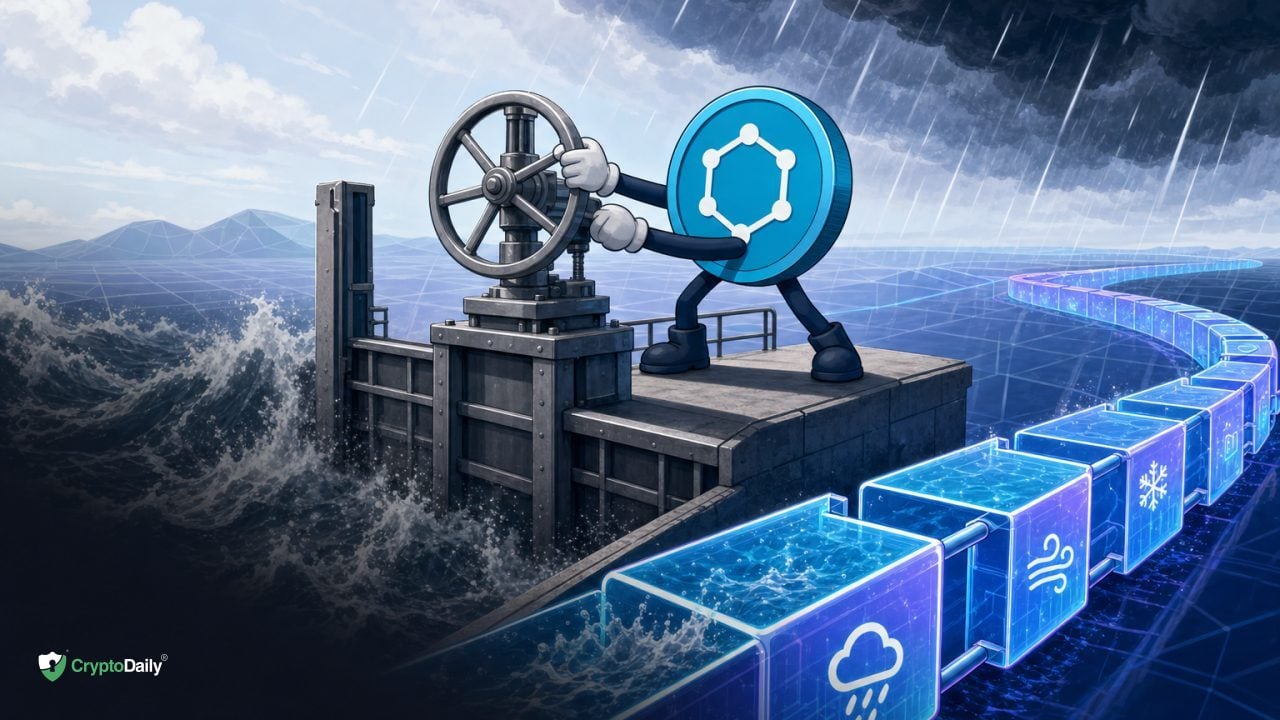
Smart contracts cannot access external data on their own. They rely on oracles—trusted data feeds that bridge the blockchain with the physical world. For climate derivatives, these oracles pull data from established meteorological agencies, such as the World Meteorological Organization (WMO) or national weather services. The oracle verifies the data source's integrity before passing the value to the contract. This step is critical for legal compliance; if the oracle pulls from an unverified or manipulated source, the contract’s payout becomes legally void.
Once the oracle confirms that the trigger condition has been met, the smart contract executes the payout logic without human intervention. Funds are transferred immediately to the beneficiary’s wallet. This automation removes the lag time associated with traditional insurance claims, which can take months to resolve. For corporate risk managers, this immediacy provides liquidity exactly when climate-related disruptions occur, stabilizing cash flow during crises.
This structure ensures that tokenized climate derivatives function as reliable financial instruments rather than speculative assets. By anchoring payouts to immutable, third-party data, these contracts provide a clear legal pathway for risk transfer. The absence of manual claims processing reduces administrative costs and eliminates disputes over loss valuation.
The chart above illustrates the market activity of a relevant climate-tech token, highlighting the liquidity and volatility inherent in this emerging asset class. Understanding this market behavior is essential for corporate entities looking to hedge carbon risk effectively.
The jurisdictional split and compliance burden
Tokenized climate derivatives operate in a contested regulatory bucket where traditional financial oversight meets decentralized technology. The primary legal friction stems from the overlapping interests of the Commodity Futures Trading Commission (CFTC) and the Securities and Exchange Commission (SEC). While the CFTC generally oversees commodity derivatives like weather and carbon contracts, the SEC retains authority over assets classified as securities. This ambiguity creates a high-stakes environment for issuers, who must navigate two distinct regulatory regimes without a unified federal framework specifically designed for on-chain climate assets.
Beyond jurisdictional disputes, tokenized derivatives face stringent KYC and AML requirements. Unlike traditional over-the-counter (OTC) markets where institutional counterparties verify each other’s identity through established legal channels, on-chain transactions occur on public blockchains. To comply with the Bank Secrecy Act and FinCEN guidelines, platforms must implement on-chain identity verification layers. This requirement effectively removes the pseudonymous nature of crypto for climate risk products, forcing issuers to build compliant infrastructure that bridges off-chain legal identity with on-chain smart contracts.
The following table compares the compliance structures of traditional OTC derivatives against emerging on-chain tokenized models.
| Feature | Traditional OTC | Tokenized On-Chain |
|---|---|---|
| Regulatory Oversight | CFTC/SEC (Clear Separation) | CFTC/SEC (Overlapping/Contested) |
| Counterparty Verification | Legal agreements & off-chain KYC | On-chain identity protocols & smart contracts |
| Settlement Finality | T+2 or negotiated terms | Atomic (instant) or scheduled block time |
| Auditability | Private ledger access for participants | Public blockchain ledger (transparent) |
| Market Access | Institutional only | Institutional and retail (via compliance gates) |
This structural divergence means that legal viability depends less on the underlying climate asset and more on the compliance architecture of the tokenization layer. Issuers cannot rely on the "code is law" narrative; they must ensure their smart contracts adhere to existing securities and commodities laws, a process that remains costly and legally uncertain in the absence of clear legislative guidance.
Oracle Risks and Data Integrity
The structural weakness of tokenized climate derivatives lies in the oracle problem: if the data source feeding the smart contract is flawed, the hedge fails. Unlike traditional derivatives settled on centralized exchange data, on-chain parametric contracts rely entirely on external data feeds to trigger payouts. When that feed is manipulated or delayed, the contract executes against false premises, exposing counterparties to unmitigated risk.
Legal validity depends on verification layers that bridge the gap between decentralized code and regulated data. Major exchanges and regulatory bodies like the CFTC require that climate data be sourced from recognized, auditable institutions. Without these safeguards, a smart contract’s execution is merely a mathematical calculation, not a legally enforceable financial instrument.
To ensure integrity, protocols must integrate redundant data sources and cryptographic verification. This means pulling climate metrics from multiple independent providers and using consensus mechanisms to validate the input before the contract responds. If the data does not meet strict quality thresholds, the contract should freeze or revert, preventing payouts based on corrupted inputs.
| Feature | Traditional Exchange | Tokenized Contract |
|---|---|---|
| Data Source | CFTC-regulated exchange | External oracle feed |
| Verification | Centralized clearinghouse | Multi-source consensus |
| Failure Mode | Exchange halt | Smart contract execution error |
The risk of manipulation is not theoretical. If an oracle is compromised, the resulting payout is irreversible. Therefore, legal frameworks must treat data integrity as a compliance issue, not just a technical one. Corporate hedgers must verify that the oracle providers meet the same audit standards as traditional financial data vendors.
Real-world adoption and case studies
Tokenized climate derivatives are moving from theoretical frameworks to active market instruments, particularly in sectors where traditional insurance markets have failed to keep pace with climate volatility. The primary value proposition lies in the programmability of risk transfer: smart contracts automate payout triggers based on immutable climate data, removing the friction of manual claims processing and reducing counterparty risk.
Smallholder risk transfer in emerging markets
In emerging economies, tokenized weather derivatives offer a structural solution for smallholder farmers who lack access to traditional crop insurance. By linking trusted climate data—such as rainfall or temperature indices recorded by independent meteorological stations—directly to a programmable financial contract, these derivatives ensure immediate liquidity upon the occurrence of adverse weather events. This mechanism closes the gap between physical risk and financial protection, allowing farmers to hedge against income shocks without the administrative overhead of conventional underwriting.
The legal viability of these instruments relies on the enforceability of the data oracle. If the smart contract’s trigger condition is met based on verified, tamper-proof data, the payout executes automatically. This reduces the moral hazard often associated with traditional insurance, where claim verification can be subjective and delayed. For African smallholder farmers, this means financial resilience is tied directly to observable physical reality rather than bureaucratic approval.
Corporate hedging and regulatory compliance
For multinational corporations, tokenized climate derivatives provide a transparent mechanism for hedging carbon exposure and regulatory risk. As carbon pricing mechanisms tighten globally, companies face increasing volatility in their compliance costs. Tokenized instruments allow for the precise, fractional hedging of carbon credits, enabling firms to manage their carbon footprint liabilities with greater granularity than traditional futures markets permit.
The integration of these derivatives into corporate treasury operations is still in its early stages, but the structural advantages are clear. Automated settlement reduces operational risk, while the transparency of the blockchain ledger simplifies audit trails for regulatory bodies. As seen in the broader adoption of tokenized assets, the legal framework is evolving to accommodate these instruments, with major exchanges and regulatory bodies beginning to establish clear guidelines for their trading and settlement. This regulatory clarity is essential for institutional adoption, ensuring that tokenized climate derivatives are not just speculative instruments, but robust tools for risk management.
Due diligence checklist for tokenized climate derivatives
Legal and risk officers must treat tokenized climate derivatives as hybrid instruments. Because the CFTC and SEC have overlapping interests in these assets, no single regulatory framework currently governs them entirely. Due diligence requires verifying that smart contract logic aligns with the underlying legal contract and that data oracles are audited for climate accuracy.
Evaluate the following structural mechanics before portfolio inclusion:
- Regulatory classification: Confirm whether the token is registered as a security or a commodity. Overlapping jurisdiction creates enforcement risk if the platform lacks proper licensing.
- Smart contract audits: Verify that the parametric payout logic has been audited by a reputable firm. Unverified code introduces execution risk that traditional insurance does not carry.
- Oracle integrity: Ensure the data source (e.g., NOAA, WMO) is immutable and tamper-proof. Manipulation of climate data could void the derivative’s hedge value.
- Counterparty risk: Tokenization reduces counterparty risk by automating payouts, but only if the stablecoin or collateral backing the contract remains solvent.
Tokenization offers a path to automate payouts via smart contracts, reducing the friction of traditional claims processing. However, this efficiency depends entirely on the technical and legal robustness of the underlying infrastructure.
Common questions on tokenized derivatives
The regulatory landscape for tokenized climate derivatives differs significantly from that of tokenized equities. While tokenized stocks face strict SEC scrutiny under the Securities Act, climate derivatives often fall under the CFTC’s jurisdiction as commodities or swaps. This distinction allows for different compliance pathways, particularly for weather-based parametric contracts that settle based on objective data indices rather than corporate equity performance.
The following questions address the legal viability and structural mechanics of these instruments.
No comments yet. Be the first to share your thoughts!