
Tokenized climate derivatives: limits and choices that change the plan
Tokenized climate derivatives are blockchain-based financial contracts that derive their value from underlying climate variables like temperature, precipitation, or carbon emission levels. By moving these instruments onto public blockchains, developers aim to automate payouts via smart contracts and reduce counterparty risk. This shift promises to open climate-risk management to a broader audience, potentially democratizing access to tools that were previously reserved for institutional players.
However, this innovation lands in a contested regulatory bucket. The CFTC and SEC have overlapping interests in these assets, with no single framework yet clearly defining their status. This ambiguity creates a complex landscape for issuers and traders alike. While the technology offers efficiency, the lack of a unified legal structure means participants must assess a patchwork of interpretations regarding whether these tokens are securities, commodities, or something entirely new.
The primary appeal lies in liquidity and transparency. Traditional weather derivatives often suffer from illiquidity and opaque pricing. Tokenization allows for fractional ownership and continuous trading, which can improve price discovery. Yet, this convenience comes with the burden of regulatory compliance. Market participants must weigh the benefits of automated, on-chain execution against the uncertainty of future enforcement actions.
Evaluating tokenized climate derivatives
Tokenized climate derivatives offer speed and transparency, but they sit in a contested regulatory bucket. The CFTC and SEC have overlapping interests, and no single framework currently governs these assets. This regulatory ambiguity creates distinct tradeoffs for liquidity providers, hedgers, and compliance officers.
To evaluate whether tokenized climate derivatives fit your strategy, compare the concrete factors below across traditional and blockchain-based structures.
| Feature | Traditional OTC | Tokenized (On-Chain) | Risk Level |
|---|---|---|---|
| Counterparty Risk | High (bilateral netting) | Low (smart contract escrow) | High |
| Settlement Speed | T+2 or longer | Near-instant (parametric) | Low |
| Liquidity Access | Limited to institutional players | Fractionalized, 24/7 markets | Medium |
| Regulatory Clarity | Established (CFTC/SEC) | Evolving, fragmented | High |
| Auditability | Opaque, private ledgers | Low |
The most significant tradeoff involves counterparty risk versus regulatory clarity. Traditional over-the-counter (OTC) contracts require trusting a single financial institution to pay out during a climate event. Tokenized versions use smart contracts to automate payouts based on verified weather data, effectively removing the risk of default. However, this benefit comes with the risk of code vulnerabilities and unclear legal recourse if a smart contract fails.
Liquidity is the second major factor. Traditional climate derivatives are often illiquid, reserved for large agricultural or energy firms. Tokenization allows fractional ownership, opening these instruments to smaller investors and improving market depth. Yet, this increased accessibility can lead to higher volatility during extreme weather events, as smaller traders may exit positions rapidly.
Finally, consider auditability. On-chain derivatives provide a transparent ledger of all trades and payouts, which simplifies compliance reporting. Traditional contracts rely on private records, making it harder to verify exposure. For organizations prioritizing transparency and automated compliance, tokenized derivatives offer a clear advantage, provided they can manage the evolving legal landscape.
How to choose a tokenized climate derivative
Tokenized climate derivatives—financial instruments that hedge against adverse weather events like droughts or hurricanes—are moving from institutional desks to public blockchains. This shift reduces counterparty risk and automates payouts via smart contracts, but it also lands in a contested regulatory bucket where the CFTC and SEC have overlapping interests.
Selecting a derivative requires matching your specific exposure to the right instrument. Below is a decision framework to assess the landscape.
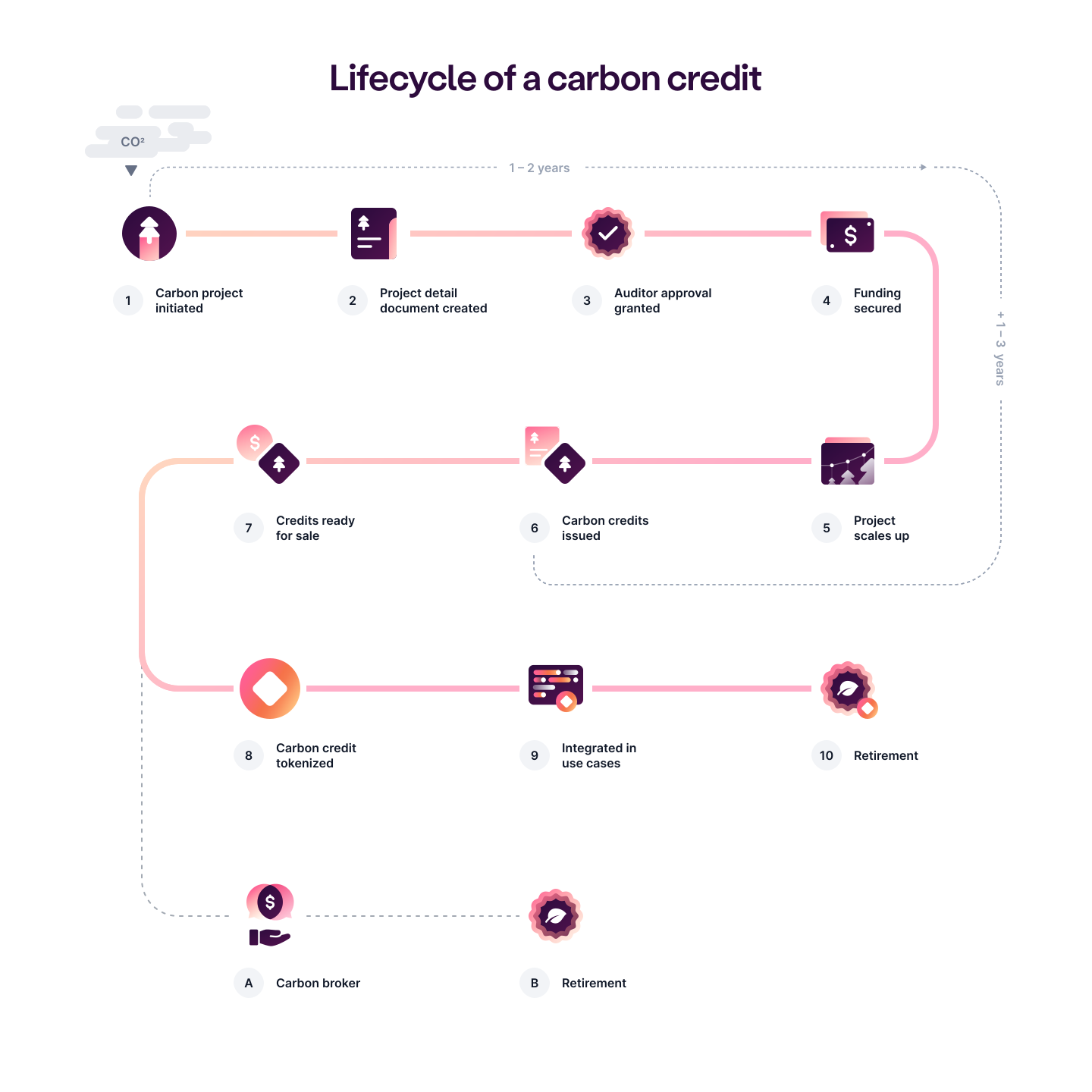
Farmers use these derivatives to hedge against poor harvests from failing rains or excessive wind, while theme parks might insure against rainy weekends. Start by quantifying your specific loss threshold. If you are an agricultural producer, your risk is tied to precipitation levels during the growing period. If you operate in tourism, temperature and rainfall during peak seasons are your primary metrics.
Because tokenized derivatives fall between traditional securities and commodities, regulatory clarity varies. In the US, the CFTC and SEC have overlapping interests with no single unified framework. Verify if the platform offering the tokenized derivative is registered with the appropriate commodity exchange commission in your jurisdiction. Non-compliant platforms may face sudden delisting or liquidity freezes.
The primary advantage of tokenization is automated payout via smart contracts based on oracle data. Ensure the oracle source for weather data is reputable and tamper-proof. If the oracle fails to report correctly, the smart contract may not trigger a payout even if your physical losses occurred. Look for platforms that use multiple independent weather data providers to mitigate oracle risk.
Spotting weak options and misleading claims
Tokenized climate derivatives promise to fix carbon credit liquidity, but the market is still figuring out how to separate signal from noise. As these instruments move from niche pilots to broader adoption, buyers and issuers face a crowded field of platforms with varying levels of regulatory compliance and technical maturity.
The primary risk lies in the regulatory gray area. Tokenized derivatives fall into a contested bucket where the CFTC and SEC have overlapping interests, but no single unified framework exists yet. This ambiguity means that not all tokenized carbon contracts are created equal. Some platforms operate with full transparency and clear legal wrappers, while others rely on vague smart contract logic that may not hold up in a dispute.
Red flags to watch for
When evaluating tokenized climate derivative platforms, look for these common pitfalls:
-
Unclear Underlying Asset Verification: Not all tokenized carbon credits are backed by real, retired offsets. Verify that the platform provides a direct link to the registry (like Verra or Gold Standard) where the credit is retired. If the platform claims "blockchain-backed" but doesn't show the on-chain proof of retirement, it's a weak option.
-
Overstated Liquidity Claims: Many platforms advertise high trading volumes that are actually wash trades or internal platform movements. Check if the liquidity comes from external market makers or genuine institutional interest. Low-quality liquidity can vanish quickly during market stress.
-
Regulatory Ambiguity: Platforms operating without clear registration or compliance with existing securities laws are high-risk. The lack of a single regulatory framework for tokenized derivatives means you must do your own due diligence on the platform's legal structure.
The reality of weather derivatives
While carbon credits dominate the conversation, weather derivatives are another growing segment. These instruments hedge against financial losses from adverse weather like droughts or hurricanes. Farmers use them to protect against poor harvests, and theme parks insure against rainy weekends. However, tokenizing these complex, data-dependent contracts is technically challenging and often over-simplified by marketing materials.
Practical due diligence checklist
- Verify Registry Integration: Does the platform connect directly to a recognized carbon registry?
- Check Regulatory Filings: Are there any SEC or CFTC actions or warnings against the platform?
- Audit Smart Contracts: Has the platform's code been audited by a reputable firm?
- Assess Liquidity Sources: Is the trading volume organic or artificially inflated?
By focusing on these concrete checks, you can avoid the weak options and misleading claims that plague the early stages of this market.
What to check next
Before committing capital or building infrastructure around tokenized climate derivatives, it helps to separate the blockchain mechanics from the underlying financial logic. These instruments combine traditional hedging strategies with programmable settlement, creating unique questions about legality, utility, and data integrity.
What is a tokenized derivative?
A tokenized derivative is a blockchain-based financial contract whose value is derived from an underlying asset, such as a cryptocurrency, stock, or commodity. By representing these contracts as tokens on a public ledger, issuers can automate payouts via smart contracts, significantly reducing counterparty risk and administrative friction compared to traditional over-the-counter markets.
What are climate derivatives?
Climate derivatives are financial instruments designed to hedge against financial losses related to adverse weather conditions, such as droughts, hurricanes, or monsoons. Unlike traditional insurance, which relies on damage assessments, these derivatives often use parametric triggers—specific weather data points that automatically settle the contract when met.
Are tokenized stocks legal in the US?
Tokenized stocks occupy a contested regulatory space in the United States. Both the CFTC and the SEC have overlapping interests in these assets, yet no single, comprehensive framework currently governs them. This regulatory ambiguity means that while some platforms operate under existing securities laws, others may be navigating gray areas that could shift as agencies finalize their stances.
Who buys weather derivatives?
The primary buyers are entities directly exposed to weather volatility. Farmers use these instruments to hedge against poor harvests caused by failing rains or excessive wind, while theme parks and energy providers purchase them to insure against rainy weekends or temperature spikes. This democratization of risk management allows smaller players to access hedging tools previously reserved for large institutions.
No comments yet. Be the first to share your thoughts!