
Why traditional climate hedging fails
Traditional weather and climate derivatives are structurally illiquid and opaque, creating a significant barrier for small-to-mid enterprises seeking ESG risk management. The market is dominated by over-the-counter (OTC) contracts that require substantial capital, legal overhead, and bilateral negotiation, effectively excluding smaller players from essential hedging tools. This lack of accessibility leaves a vast segment of the economy exposed to climate volatility without affordable protection.
The opacity of these traditional instruments further complicates risk assessment. Pricing is often based on proprietary models and private data, making it difficult for participants to verify the accuracy of payouts or the underlying exposure. Counterparty risk remains a persistent concern, as the value of the derivative is tied to the financial stability of a single institution rather than a decentralized, transparent ledger.
Tokenization addresses these structural flaws by moving climate derivatives onto public blockchains. Smart contracts automate payouts based on verified oracle data, eliminating the need for manual claims processing and reducing administrative friction. This shift not only democratizes access to climate risk management but also enhances liquidity by allowing smaller, fractionalized positions to be traded openly. The result is a more efficient, transparent, and inclusive market for ESG risk hedging.
How tokenization automates payouts
Tokenized climate derivatives replace manual claims processing with parametric smart contracts. These contracts encode specific environmental thresholds—such as rainfall levels, temperature readings, or wind speeds—directly into immutable code. When the threshold is breached, the payout triggers automatically, removing the need for subjective loss assessment or administrative approval.
This mechanism eliminates counterparty risk and administrative friction. In traditional insurance, payouts depend on the insurer’s solvency and willingness to pay, often delayed by lengthy audits. On-chain derivatives settle instantly against verified data, ensuring liquidity regardless of the underlying platform’s operational status.
The reliability of this system depends entirely on oracle accuracy. Smart contracts cannot interpret raw weather data; they require trusted oracles to bridge off-chain reality with on-chain execution. If the oracle data is compromised or delayed, the contract fails. Therefore, selecting robust oracle networks is as critical as the contract logic itself.
The process begins by codifying the risk event into measurable data points. Instead of assessing actual financial loss, the contract specifies exact conditions—for example, "payout if rainfall in Mumbai drops below 50mm in July." This removes ambiguity and prevents moral hazard.
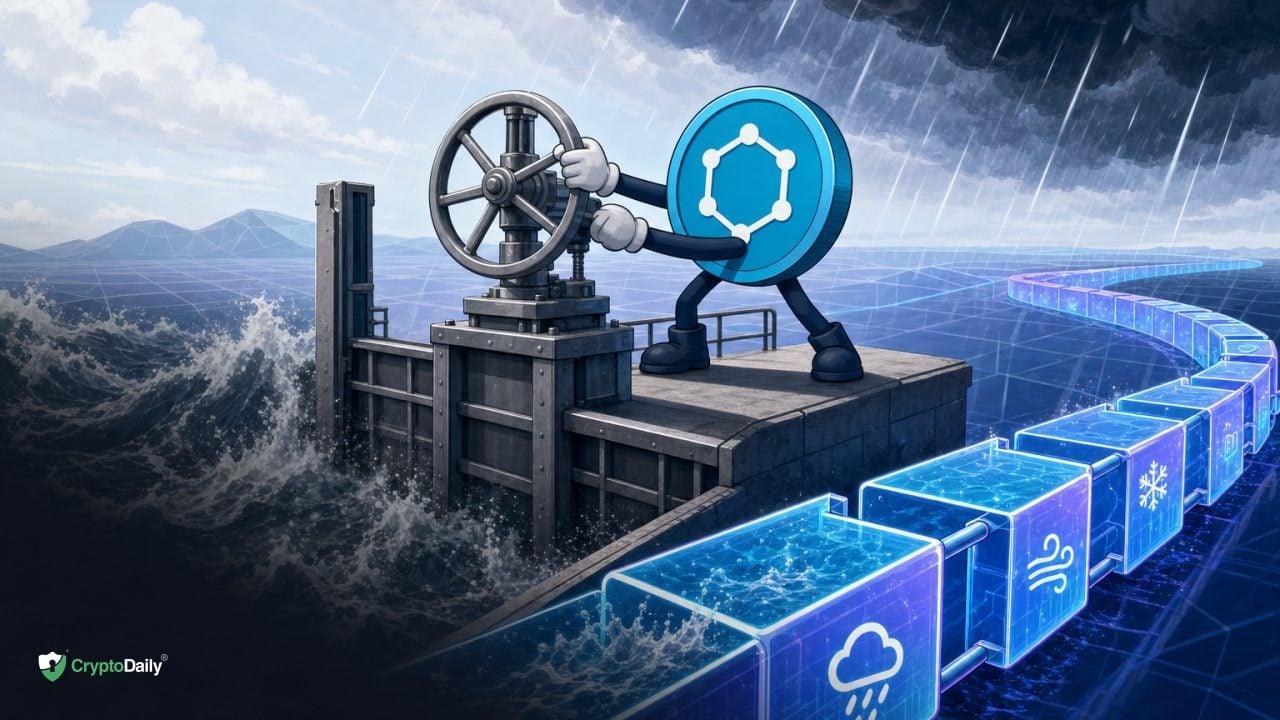
Smart contracts must link to reliable data sources. Oracles fetch real-time weather data from meteorological agencies or satellite feeds. In high-stakes hedging, multiple oracle providers are often used to cross-verify data integrity, ensuring no single point of failure can manipulate the trigger.
Once the oracle confirms the threshold breach, the smart contract executes the payout immediately. Funds are transferred from the liquidity pool or collateral vault directly to the buyer’s wallet. This instant settlement provides immediate liquidity for affected businesses, bypassing weeks or months of traditional claims processing.
The efficiency of this model relies on the precision of the underlying data infrastructure. As noted in research on blockchain-based weather derivative platforms, the technical viability of such hedging tools hinges on the seamless integration of smart contracts with verified external data feeds. This integration ensures that the financial instrument remains a pure reflection of the physical risk it is designed to hedge.
Real-world pilots and market players
The transition from theoretical models to active market infrastructure is evident in recent institutional partnerships. The collaboration between VivoPower and KWeather represents a significant step toward standardizing climate risk management. By building a weather derivative token, these entities are moving beyond abstract discussions to implement programmable financial contracts that settle automatically based on verified climate data.
This shift relies heavily on the integration of trusted oracles and smart contracts to eliminate counterparty risk and administrative friction. For Main Street firms, this mechanism offers a way to hedge against volatility without the heavy overhead of traditional over-the-counter (OTC) markets. The goal is to democratize access to sophisticated hedging tools, allowing smaller entities to manage exposure to physical climate risks with the same precision as large institutional players.
To understand the operational advantage, it is helpful to compare the mechanics of traditional weather derivatives against their tokenized counterparts. The following table highlights the structural differences in liquidity, settlement, and accessibility.
| Feature | Traditional OTC | Tokenized On-Chain |
|---|---|---|
| Settlement Speed | T+2 to T+5 (manual reconciliation) | Near real-time (smart contract execution) |
| Liquidity | Low (bilateral, illiquid) | Higher (fractionalization, secondary markets) |
| Accessibility | High minimums, institutional only | Lower barriers, retail and SME access |
| Transparency | Limited to counterparties | Public ledger, verifiable oracle data |
The Oracle Problem and Data Integrity
Smart contracts execute logic with mathematical precision, but they cannot verify the physical world. In tokenized climate derivatives, this distinction creates a critical vulnerability known as the "oracle problem." The smart contract is only as reliable as the data feeds that trigger its payouts. If the underlying climate metrics are inaccurate, manipulated, or delayed, the hedge fails precisely when it is needed most.
Unlike traditional insurance, where loss assessment involves human adjusters and legal review, parametric triggers rely entirely on automated data inputs. This removes human discretion but introduces single points of failure. A corrupted data source can lead to erroneous payouts or denied claims, undermining the financial integrity of the entire instrument.
Without reliable data, it's just a smart contract in search of a fact.
To mitigate this risk, protocols must integrate trusted, immutable climate data feeds. These oracles act as the bridge between blockchain and reality, requiring rigorous validation mechanisms to prevent manipulation. The choice of data provider is not a technical detail; it is the primary risk factor in the contract's design. Investors must scrutinize the provenance of the climate data, ensuring it comes from official meteorological agencies or verified scientific sources rather than unverified third parties.
Ensuring data integrity requires a multi-layered approach. This often involves aggregating data from multiple independent sources and using consensus mechanisms to validate the final metric. Only through such robust verification can tokenized climate derivatives function as a true hedge against environmental risk.
Evaluate tokenized climate derivatives
Tokenized climate derivatives are emerging as a blockchain-based tool to hedge climate risk through parametric smart contracts [[src-serp-2]]. These instruments automate payouts based on predefined environmental metrics, reducing the counterparty risk inherent in traditional insurance [[src-serp-1]]. However, the mechanism is only as reliable as its underlying data and code. Investors and risk managers must rigorously audit the technical infrastructure before deploying capital.
Verify oracle integrity
The core vulnerability of parametric derivatives is the data source. Smart contracts execute automatically when oracles report specific weather events, such as rainfall levels or wind speeds. If the oracle is compromised or the data feed is delayed, the payout logic fails. Evaluate whether the protocol uses multiple independent oracles and whether the data providers are certified meteorological agencies. A single point of failure in data reporting can invalidate the entire hedge.
Audit the smart contract
Code is law, but it is also the primary attack vector. Tokenized derivatives rely on immutable logic to enforce payouts. Require a third-party security audit from a reputable firm before engaging with any platform. Look for evidence of formal verification, which mathematically proves the code behaves as intended under all conditions. Check for historical vulnerabilities or known exploits in similar parametric structures.
Assess liquidity and settlement
Unlike traditional derivatives, on-chain markets can suffer from shallow liquidity. Ensure the tokenized product has sufficient trading volume to allow for entry and exit without significant slippage. Verify the settlement mechanism: does the protocol hold the collateral in a transparent reserve, or is it reliant on off-chain promises? Direct exposure to the underlying asset or a stablecoin reserve is preferable to complex leverage structures.
| Factor | Due Diligence Check |
|---|---|
| Data Source | Certified meteorological agency or multi-oracle system |
| Code Security | Recent third-party audit with formal verification |
| Liquidity | Average daily volume > $100k or deep order book |
| Settlement | On-chain collateral held in transparent reserve |
No comments yet. Be the first to share your thoughts!