
Tokenized climate derivatives: volume and on-chain momentum
The tokenized climate derivatives market has moved beyond its initial experimental phase, establishing itself as a significant component of the broader Real World Asset (RWA) ecosystem. In June 2026, the total volume of RWA-linked derivatives approached the $300 billion mark, signaling a structural shift in how environmental risk is priced and traded. This scale is no longer confined to niche crypto protocols but represents a maturing infrastructure for institutional hedging.
On-chain activity reflects this growth. Approximately $20 billion in this volume trades on weekends, a metric that underscores the continuous, 24/7 nature of blockchain-based markets. Unlike traditional over-the-counter (OTC) climate swaps, which often settle during standard banking hours, tokenized instruments allow for immediate liquidity and transparent settlement. This constant market access is critical for climate risk management, where weather patterns and environmental data do not adhere to traditional market calendars.
The convergence of traditional finance and decentralized infrastructure is evident in this volume. As regulatory frameworks catch up to the technology, the distinction between "crypto" and "RWA" continues to blur. For legal and compliance professionals, this shift presents both opportunities and challenges. The transparency of on-chain records offers a new standard for auditability, yet the cross-border nature of these tokens complicates jurisdictional oversight. Understanding this volume trend is essential for anticipating how climate risk will be managed in the coming years.
Mechanism of automated settlement
Tokenizing weather derivatives on public blockchains shifts the operational model from manual verification to code-enforced execution. In traditional over-the-counter (OTC) markets, settlement depends on bilateral agreements and manual data reconciliation, creating friction and latency. By contrast, tokenized structures utilize smart contracts to automate payouts when predefined meteorological conditions are met. This automation reduces counterparty risk by eliminating the need for manual intervention or credit assessment at the point of settlement.
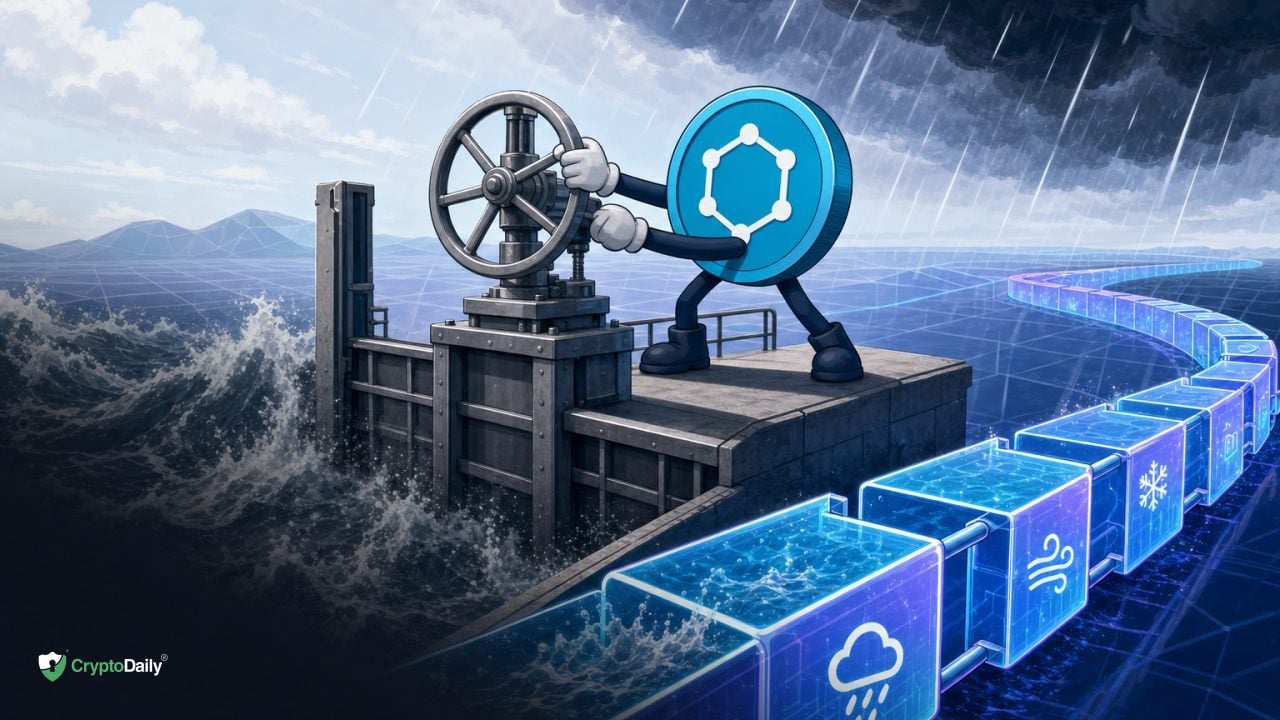
The core mechanism relies on oracles to bridge off-chain weather data with on-chain logic. When a specific threshold—such as rainfall levels or temperature averages—is breached, the smart contract triggers an automatic transfer of funds to the holder. This process ensures that payouts are immediate and immutable, removing the administrative overhead that typically plagues climate risk management. As noted in industry analysis, this approach could serve as a critical real-world use case for crypto infrastructure, democratizing access to climate-risk tools beyond institutional players.
For non-institutional participants, this transparency and automation lower the barrier to entry. Investors can purchase tokens representing a share of the derivative without navigating complex legal frameworks or relying on intermediaries to enforce contracts. The result is a more liquid and accessible market for weather risk, where compliance and execution are handled by the protocol itself rather than human discretion.
Regulatory Overlap and Compliance Friction
Tokenized climate derivatives operate in a contested regulatory bucket where the CFTC and SEC maintain overlapping interests. Unlike traditional commodities, which fall under the CFTC’s jurisdiction via the Commodity Exchange Act, or securities, regulated by the SEC under the Securities Act of 1933, tokenized derivatives often lack a clear classification. This ambiguity creates compliance friction for traders and issuers who must navigate two distinct legal frameworks simultaneously.
The lack of a single unified framework means that tokenized weather derivatives can be viewed as either commodities or securities depending on their structure. If the token represents a direct claim on a physical commodity or a standard weather index, the CFTC may assert jurisdiction. However, if the token is packaged as an investment contract with an expectation of profit from the efforts of others, the SEC may classify it as a security. This duality forces market participants to conduct rigorous legal analysis before listing or trading these assets.
| Feature | Traditional Weather Derivatives | Tokenized Climate Derivatives |
|---|---|---|
| Primary Regulator | CFTC (Commodity) | CFTC or SEC (Contested) |
| Legal Framework | Commodity Exchange Act | Securities Act / CEA (Ambiguous) |
| Settlement | Cash or Physical (OTC) | Smart Contract (On-Chain) |
| Transparency | Limited (Private Contracts) | Public Ledger (On-Chain) |
This jurisdictional overlap creates both risk and opportunity. For compliance-focused traders, the uncertainty adds legal risk, requiring careful structuring to avoid enforcement actions. However, it also opens the door for innovative compliance solutions. By leveraging on-chain transparency, issuers can potentially demonstrate compliance with both CFTC and SEC requirements more effectively than traditional OTC markets. As the regulatory landscape evolves, clarity will likely emerge, but until then, the dual-regulation environment remains a defining characteristic of tokenized climate derivatives.
| Feature | Traditional | Tokenized |
|---|---|---|
| Primary Regulator | CFTC (Commodity) | CFTC or SEC (Contested) |
| Legal Framework | Commodity Exchange Act | Securities Act / CEA (Ambiguous) |
| Settlement | Cash or Physical (OTC) | Smart Contract (On-Chain) |
| Transparency | Limited (Private Contracts) | Public Ledger (On-Chain) |
Tokenized Climate Assets and ESG Liquidity
The broader tokenization of climate assets—spanning CO2 offsets, water rights, and solar power generation—creates the foundational infrastructure for a more liquid market. By converting these physical assets into digital tokens, issuers can unlock liquidity in traditionally illiquid segments. This shift is critical for improving ESG reporting accuracy, as blockchain records provide immutable proof of asset origin and retirement status.
Tokenized derivatives build on this infrastructure by allowing traders to hedge against carbon price volatility without holding the physical credit. This separation of trading from custody enhances market efficiency. Regulatory bodies are increasingly scrutinizing these mechanisms to ensure that tokenized derivatives do not obscure the underlying environmental integrity of the credit. The goal is to align financial innovation with strict compliance standards, ensuring that every token represents a verified, auditable reduction in emissions.
| Feature | Traditional Markets | Tokenized Markets |
|---|---|---|
| Liquidity | Low (fragmented) | High (global access) |
| Transparency | Opaque reporting | Immutable ledger |
| Settlement | T+2 or longer | Near-real-time |
Due Diligence for Climate Asset Trading
Evaluating tokenized climate derivatives requires verifying the integrity of the data layer. Unlike traditional equities, the value of these assets depends entirely on the accuracy of external weather data. Investors and compliance officers must audit the oracle infrastructure to ensure that on-chain prices reflect real-world conditions. This process is not optional; it is the primary safeguard against basis risk and manipulation.
Confirm that the oracle provider has a published methodology for data collection. The provider should be an established entity with a history of serving regulated insurance or reinsurance markets. Avoid protocols that rely on anonymous or unvetted data sources. The credibility of the derivative rests on the reputation of the data feed.
Request access to the raw data sources used by the oracle. Legitimate protocols publish the specific meteorological stations or satellite feeds they aggregate. If the source data is opaque or proprietary without a clear audit trail, the asset carries unacceptable counterparty risk. Transparency allows for independent verification of settlement values.
Ensure the data resolution matches the contract specifications. A derivative based on daily temperature averages cannot be settled accurately using hourly data without a clear conversion methodology. Misaligned granularity is a common source of dispute in climate contracts. Verify that the contract terms explicitly define the data frequency and temporal aggregation method.
Analyze the protocol’s governance for handling data errors. There must be a clear, time-bound process for correcting erroneous data before settlement. Without a defined correction window, a single data point error can trigger an incorrect payout, exposing both the issuer and the holder to financial loss. The mechanism should be automated where possible to reduce human intervention.

Determine if the oracle provider complies with relevant financial data standards. In jurisdictions with strict commodity trading regulations, the data provider may need to be registered as a designated contract market or similar entity. Non-compliant data feeds can render the derivative unenforceable in court. Consult legal counsel to verify the regulatory status of the data source.
The reliability of a tokenized climate derivative is only as strong as its weakest data link. A rigorous due diligence process that prioritizes oracle transparency and regulatory compliance protects investors from structural flaws in the asset’s design. Always treat the data feed as the core asset, not the token itself.
No comments yet. Be the first to share your thoughts!